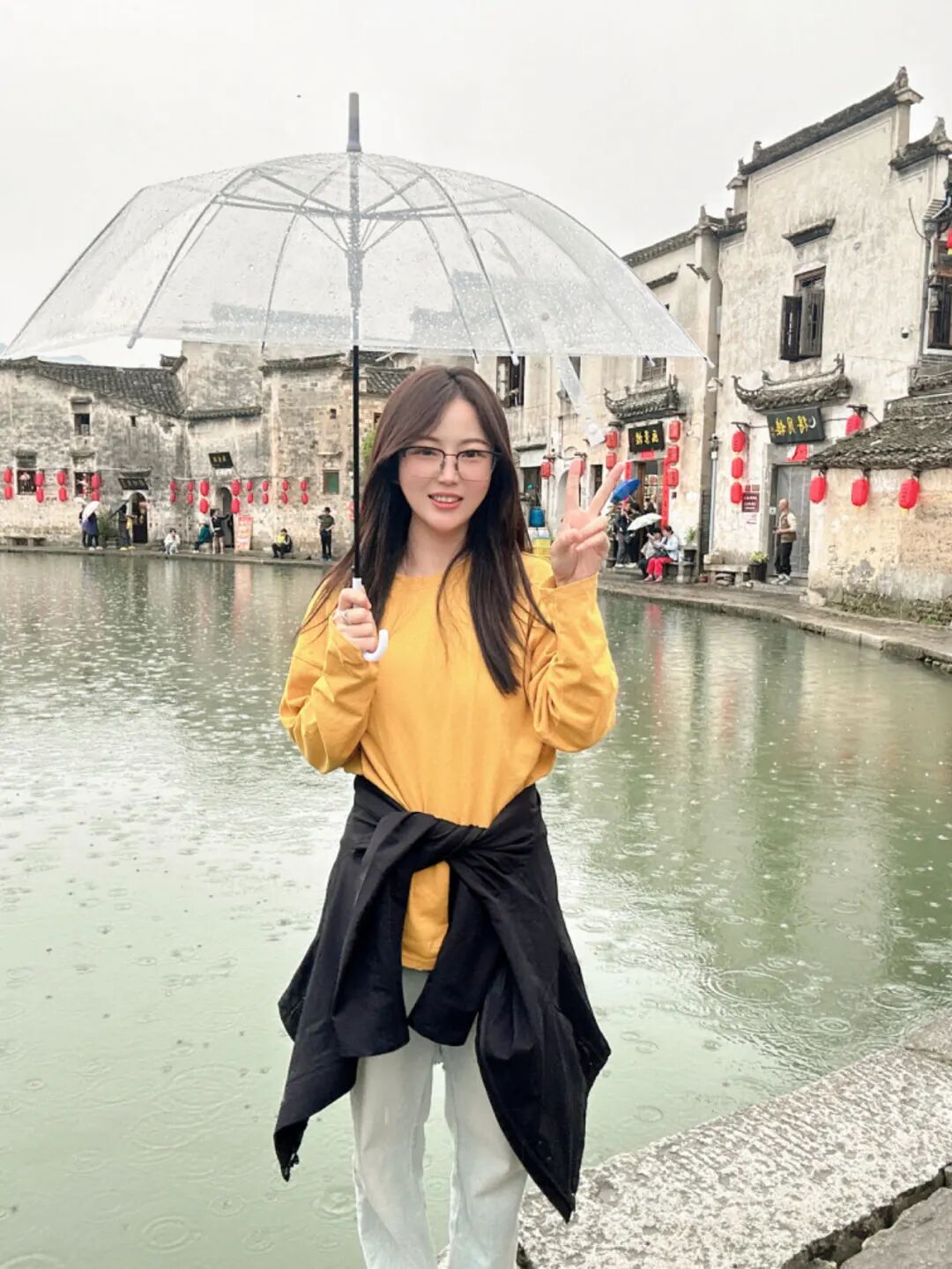
In February 2023, after a 13-hour surgery, 33-year-old Ding Xue woke from anesthesia and her first instinct was to check if the drainage tubes on her abdomen were still there.Under the "pressure" of the tumor, these two tubes, which had accompanied her for over three months, constantly reminded her that she was a patient hanging by a thread.Months earlier, due to severe jaundice, she was urgently sent to Zhongshan Hospital, Fudan University, for external drainage treatment. Following a biopsy, she was diagnosed with intrahepatic cholangiocarcinoma.The urgent condition led Ding Xue to seek medical help across various hospitals in Shanghai. However, despite undergoing a series of perfusion and ablation therapies, her tumor continued to grow."After my first surgery at Fudan University Shanghai Cancer Center, I felt a wave of panic when I touched the drainage tubes and realized they were still there. After repeatedly asking the attending doctor, I learned the tumor couldn't be removed due to vascular adhesion. My heart sank at that moment."These repeated setbacks once made Ding Xue lose her will to live. However, her sister, only three years older, refused to give up and insisted on driving her to Beijing for further treatment.A journey of over a thousand kilometers, earnest pleas for medical help, a desperate attempt, and a grueling 13-hour battle...Waking up in the ICU, Ding Xue, who said she had nearly walked through the gates of death, recalled: "My first reaction was joy, because I realized those two drainage tubes were gone."
—————
Author|Wu Jiu
Editor|Wu Jiu
「 Encountering Cancer Again 」Facing cancer again, Ding Xue was initially not surprised. At age 17, she had already undergone surgery and chemotherapy for colorectal cancer at Nanjing Drum Tower Hospital.In her memory, her family seemed constantly besieged by cancer."My mother had ovarian cancer when she was young; a few years ago, one of my uncles was diagnosed with colon cancer with liver metastasis; and my aunt had endometrial cancer." Even before her own diagnosis, she was busy managing her mother's early-stage colon cancer, paying little attention to her own occasional stomachaches. "Fortunately, my mother's colonoscopy caught it early, so she didn't need chemotherapy. I thought we could finally breathe a sigh of relief, but then I collapsed."At that time, Ding Xue didn't know that the recurring misfortune in her family was actually due to a specific genetic mutation—a germline mutation in the MMR gene:"I later learned that our family's condition is called Lynch syndrome. In simple terms, it's a hereditary disease that increases cancer risk, but it responds well to immunotherapy."For patients with Lynch syndrome, the MMR gene in their normal cells' DNA is also defective. This genetic flaw can be inherited through DNA, characterized by early onset, multiple primary tumors, and heredity. Patients often have a typical family history of cancer.However, the aggressive tumor, rapidly deteriorating condition, and severe jaundice left the already exhausted and anxious Ding Xue and her family with no time to prepare:"Back then, I really didn't understand what Lynch syndrome or immunotherapy meant."Nearly comatose, Ding Xue had an ultrasound at a local emergency room. The massive liver lesion gave her a bad premonition. The next day, her sister took her to Zhongshan Hospital, Fudan University, for external drainage to urgently protect her liver and stabilize her vitals. The CT and pathology reports showing "5.5cm" and "intrahepatic cholangiocarcinoma" completely threw the family into panic.In the chaos, the immunohistochemistry report indicating the loss of four known MMR proteins (MLH1, MSH2, MSH6, and PMS2) was buried in thick medical records, unnoticed and unmentioned by anyone.「 The Closed Door to Survival 」Although her jaundice was effectively relieved, the prognosis from Zhongshan Hospital was grim: "She might only have a few months left." In January 2023, unwilling to accept this, her sister transferred her to Fudan University Shanghai Cancer Center. "The doctor said there might still be a slim chance for surgery, so we went."Under the hospital's arrangement,Ding Xue sequentially tried arterial infusion chemotherapy, ablation, and surgery, but none yielded significant results.The following month, after the most devastating exploratory laparotomy, her will completely broke, and she dropped to just over 40 kg. "The tumor had grown from 5.5cm to 10cm, and lymph node metastasis had occurred.""At that time, I truly felt I was beyond saving." Yet, her sister continued to search for medical advice online. "She never gave up, constantly asking which hospitals and doctors had more experience with liver tumors." After much effort,her sister made up her mind to take her north to the Cancer Hospital, Chinese Academy of Medical Sciences, to seek a glimmer of hope."I had no hope at all and didn't want to go to Beijing. I felt that no treatment would work anyway." The series of setbacks nearly broke Ding Xue. "I just lay on the sofa at home all day, day and night, taking endless liver-protecting medications,with two drainage tubes inserted and bile constantly leaking from them, it was truly agonizing."Finally, unable to resist her sister's persistent insistence, Ding Xue was practically dragged into the car to Beijing. "She told me, 'Just go once, treat it like a trip. Whatever the outcome, let's just go first.'" Thus,her sister drove her all the way from Jiangsu to Beijing, over a thousand kilometers and a 9-hour journey. The sisters barely spoke along the way,"I felt like I was on my last legs, barely holding on. I don't even know how we made it to Beijing."The last straw her sister found was Director Wang from the Hepatobiliary Surgery Department at the Cancer Hospital, Chinese Academy of Medical Sciences. Faced with Ding Xue's severe condition, Director Wang initially hesitated to take her case. "He said that while there was a slight chance for surgery, even if successful, it might only extend her survival by a few months."Director Wang's response did not deter her sister. "We still pleaded with him to perform the surgery. Regardless of the outcome—whether she wouldn't make it off the table or her condition worsened afterward—it didn't matter. We were willing to take the risk ourselves."Persuaded by their persistence, Director Wang agreed to the surgery.After comprehensive tests ruled out distant metastasis, Ding Xue lay on the operating table again on March 31, 2023.Long-term suffering and treatment failures had left her exhausted, but facing her sister's firm resolve and the doctor's willingness to try, this faint glimmer of hope reignited her will to fight fate. "The day before surgery, I was so nervous and excited that I couldn't sleep." For Ding Xue at that time, what awaited her upon waking was completely unknown. "But we still wanted to take one more gamble."Due to the complex reconstruction of the hepatic portal vessels,this arduous surgery lasted 13 hours."After the operation, I couldn't wake up, so Director Wang kept me in the ICU for a night. I finally woke up around 8 a.m. the next day." Opening her eyes to the ward ceiling and recalling the previous surgical failure, Ding Xue's first instinct was to check for the two drainage tubes on her abdomen,"When I realized they were gone, I felt quite happy.""The surgery was very successful. Director Wang removed all the visible tumors." Boosted by her optimistic mood, Ding Xue's recovery was surprisingly fast. "I stayed in the ward for about a week and then was discharged." This phased breakthrough greatly encouraged both Ding Xue and Director Wang. Perhaps moved by her will to survive, Director Wang paid close attention to her."He told me to come directly to him for follow-ups. I remember the postoperative treatment plan was chemotherapy combined with immunotherapy."Ding Xue said.This wasn't the first time Ding Xue had heard of "immunotherapy." Before surgery, she and her sister had overheard fellow patients in the ward discussing its effects. "Hearing them say that immunotherapy combined with chemotherapy shrank their tumors, my sister went to ask them which immunotherapy drug they used."At the time, Ding Xue didn't know who was eligible for immunotherapy or whether it would work for her. "I just thought there were no other options, so why not try?" With a "last resort" mindset,she began her first treatment regimen of PD-L1 combined with Tegafur.As it turned out, fate brought her good news once again. A follow-up three months later showed that her liver condition was stable, and the previously enlarged lymph nodes had significantly shrunk, indicating the drug regimen was effective. "Imaging showed the lymph nodes shrank from 1.3cm to 1.1cm. Director Wang told me that since the regimen was working, we should continue with it."Ding Xue never imagined thatafter hanging by a thread just months ago, she now had hope for life again.She began searching for immunotherapy online, sharing her cancer journey, and gradually joined several patient support groups. "Until one day, a fellow patient saw my pathology report and @'d me in the group,saying I had 'dMMR' and microsatellite instability, which is why immunotherapy worked for me."With his explanation, Ding Xue joined the Panda Group. "I first joined a Lynch syndrome patient group, studied some materials there, and finally realized that this might be my situation." Driven by curiosity, she dug out her mother's old immunohistochemistry report at home. The results clearly indicated a loss of "MLH1, MSH2, MSH6, and PMS2," which instantly made everything click for her. "But because my mother had early-stage colon cancer and didn't need chemotherapy back then, everyone overlooked the crucial information about 'Lynch syndrome'."「 Pushing Back the Gloom Together 」After realizing she was a suitable candidate for immunotherapy, Ding Xue's mindset shifted significantly. "Since learning that immunotherapy was an option, I felt quite fortunate. My confidence went from 50% to maybe 90%."After joining the Panda Group and studying the shared materials,Ding Xue gained a deeper understanding of her condition and stronger confidence in her future treatment,"I used to be quite negative and self-conscious, not wanting to go out, constantly worrying about a sudden relapse. Now that I understand my situation and believe I can benefit from immunotherapy, I feel much more motivated."Besides the Lynch group, Ding Xue also joined the Panda Hepatobiliary Health Exchange Group. There, she met more patients with similar conditions,"The group atmosphere is great. When someone asks for help, replies are quick, and several members are doctors."In her view, she received more targeted help from the group. "For example, members recommend doctors who carefully review imaging scans, and share ways to manage side effects."Compared to the pessimistic atmosphere in other patient groups, Ding Xue said she most appreciated the emotional support from the Panda Group. "People often send red envelopes in the group to announce they've achieved 'CR' (complete response). Seeing that makes me happy too, and I always join in to congratulate them and share in their joy."Ding Xue mentioned thatcancer patients also need dignity and do not wish for their deteriorating or final moments to be posted online,"We also have an unwritten rule: if someone feels they are nearing the end, they quietly leave the group. If anyone asks, we tell them, 'Don't ask, they must be resting well, let's not disturb them.' We know they might have passed away, but we respect each other's privacy."Today,under the effect of immunotherapy, Ding Xue's lymph node metastasis continues to shrink, and her life is gradually returning to normal.On March 10, 2024, she returned to work. "After going back to work, I feel like I'm somewhat back to normal. My parents and sister no longer constantly urge me to exercise or go out to relax as they did before. Since I started working, everyone's mindset has gradually calmed down, and life is no longer solely consumed by cancer."「 Passing on the Glimmer of Hope 」Whenever a new patient joins the group, Ding Xue always advises them to undergo genetic testing: "If finances allow, it's best to get genetic testing early on.If a matching target is found, it opens another treatment path.But objectively, only a minority are suitable for immunotherapy." She encourages patients to listen and ask more. "Even though they are all experts, their specialties may differ completely. Patients and families need to synthesize information from multiple sources to make informed decisions."Beyond discussing medical conditions, Ding Xue and fellow patients mostly share daily life moments. "Like small things about working to earn money, or how to save on treatment costs."In her view, these "little joys" help dissolve the sorrow and fear brought by cancer,"For example, if I cook a dish and post it in the group, someone might reply, 'I haven't decided what to eat today.' We also organize offline gatherings, like dining out or shopping together." Ding Xue noticed a clear difference between communicating with caregivers and patients themselves,caregivers focus more on the illness, while patients often just want to talk about themselves."Looking back, it still feels incredible. I never thought I'd survive this long after surgery, especially since every doctor I saw back then said I only had a few months left." Ding Xue is still on a 21-day treatment cycle. After her next follow-up, she plans to ask Director Wang if she can stop taking oral Tegafur and continue with PD-L1 alone,"Immunotherapy sustains my belief. Since knowing it works for me, I remind myself to take it on schedule and also focus on building up my physical strength.""During follow-ups, Director Wang sees me and says I've gained weight." Ding Xue has now returned to her previous weight. "Director Wang constantly tells me to exercise. I tell him I'm running on a treadmill to lose weight, and he says, 'Well, you should keep running.'"In her spare time, Ding Xue has made travel plans. "For example, hiking in Anhui or chasing idols in the Northeast.Every time I go to Beijing for a follow-up, I go out to play the day after my tests, usually for 4 or 5 days before returning to work;occasionally, I meet up with two good friends for a road trip. We've been to Mount Tai, Mount Huang, Mount Jiuhua, and Mount Putuo."Meanwhile, Ding Xue continues to learn in the Panda Group. "I also need to consider what I would do if I suddenly relapsed one day. How should I treat it? Should I take medication or join a clinical trial? I want to have some basic judgment myself."Throughout her cancer journey, Ding Xue wants to be a brave and informed person. "Lynch syndrome" undoubtedly feels like a "genetic curse," occasionally reminding her of that once-closed door to survival. Yet, repeated attempts are like repeated strikes against life's barriers,"Maybe this time, we'll finally break it open."
To protect patient privacy, names in this article are pseudonyms.
Images containing patient portraits have been authorized by the patients and may not be used without permission.

< Small Donation Channel | Certified by Charity China >